Overview
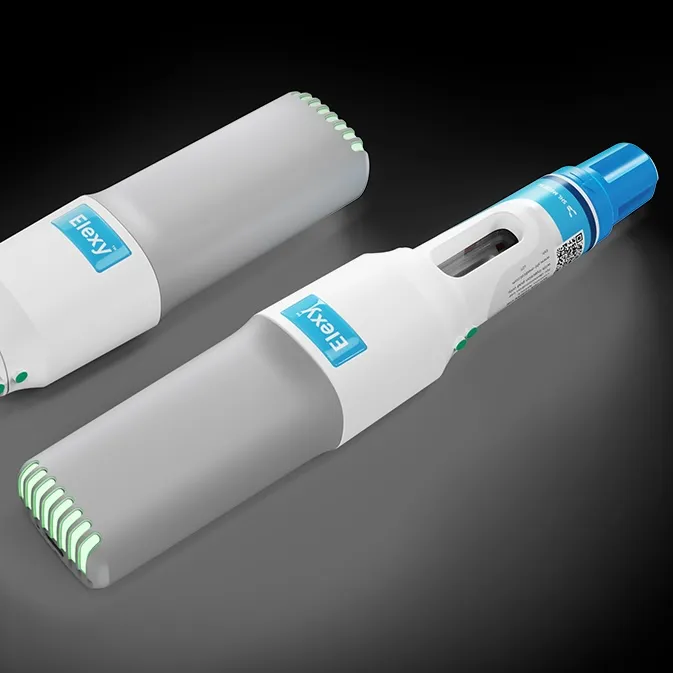
SHL Medical includes in its portfolio the first connected autoinjectors, introducing a new generation of smart drug delivery devices. A cloud-based platform was needed to manage and monitor fleets of this devices across global clinical trials and treatments.
December 2022 – December 2025
Role
- Lead UX Designer
- Senior Frontend Developer
Tech stack
Outcomes
Agile design integration
Established common grown to integrate UX in the Agile process with the rest of teams.
A design system
It provided consistency and a shared foundation that streamlined both design and development workflows across teams.
State of the art medical device platform
A single interface solution to track and manage medical devices in real time.
My work as designer
Context
Connected medical devices are a relatively new frontier. Unlike mature IoT sectors (smart home, industrial), the medical device space lacks established workflows and shared mental models among users. Clinical trials are still done under supervision with traditional analog devices and data has to be registered manually. Operations teams still rely on spreadsheets, manual logs, and fragmented tooling to track devices and their activities.
This immaturity presented both a challenge and an opportunity: there were no known competitors to benchmark against, but other platforms exist in different consumer fields with established mental models we could lean on.
There was no strong competitive benchmark to lean on. New patterns had to be established.
The challenge
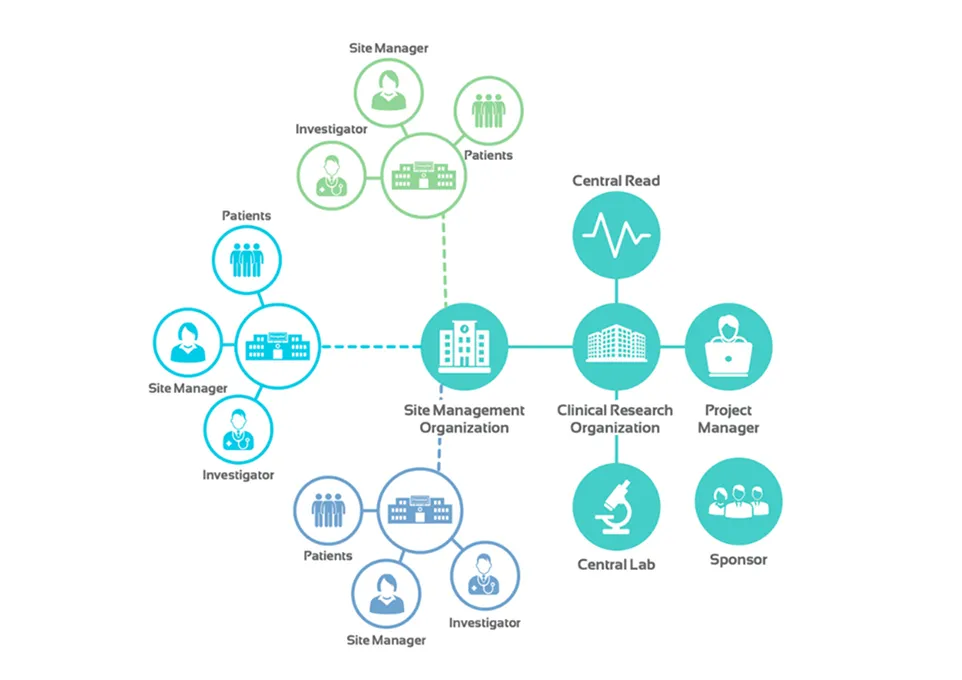
Clinical trials or medical monitoring can be high-stakes operations. Is common that they involve hundreds of sites across dozens of countries, thousands of patients and tens of thousands of connected devices. Managing medical operations require an extensive number of different professionals with different tasks, goals and pain points.
The obtained data can determine wheter a drug gets approved or a treatment is correctly been supplied and is having the expected outcome.
When something goes wrong with a device — a firmware bug, a dead battery or an incorrect dosage — and nobody notices in time, the consequences cascade: missing data, protocol deviations, potentially months of delayed timelines costing millions and patient safety concerns.
My process
When I joined the project as the unique designer, development was already underway and there was a will to deliver a working solution as quickly as possible. Because of this, I couldn’t apply the User-Centered Design (UCD) process in its full form. Instead, I had to adapt the methodology to fit an already-moving environment.
Constraints That Shaped the Process
- Pre-Existing Technical Decisions: Architectural and technical choices were set before design or outside our area of influence. We had to work within fixed constraints, negotiating scope and improving usability without changing core structures.
- A Legacy of Poor UI Design: The interface evolved without design oversight: inconsistent look & feel, duplicated functionalities and unclear architecture. The redesign needed major usability gains without disrupting established workflows.
- Unclear Personas and Limited Research Time: The user base was diverse and loosely defined, with no formal personas. Limited research time made it hard to validate assumptions about goal and pain points.
- Prototype Testing Limitations: Because the UI depended on real device telemetry, static prototypes couldn’t support meaningful usability testing until a later stage.
Design approach
With limited formal research time, learning had to happen through alternative channels:
- Stakeholder interviews with product managers, device engineers, and customer success to reconstruct implicit knowledge about users.
- Analysis of internal documentation and other non-medical IoT platforms.
- Session observation of internal users operating the existing platform.
- Support ticket analysis to identify recurring pain points and confusion patterns (on later stages).
This wasn’t a substitute for direct user research, but it built enough foundational understanding to make informed design decisions under time pressure.
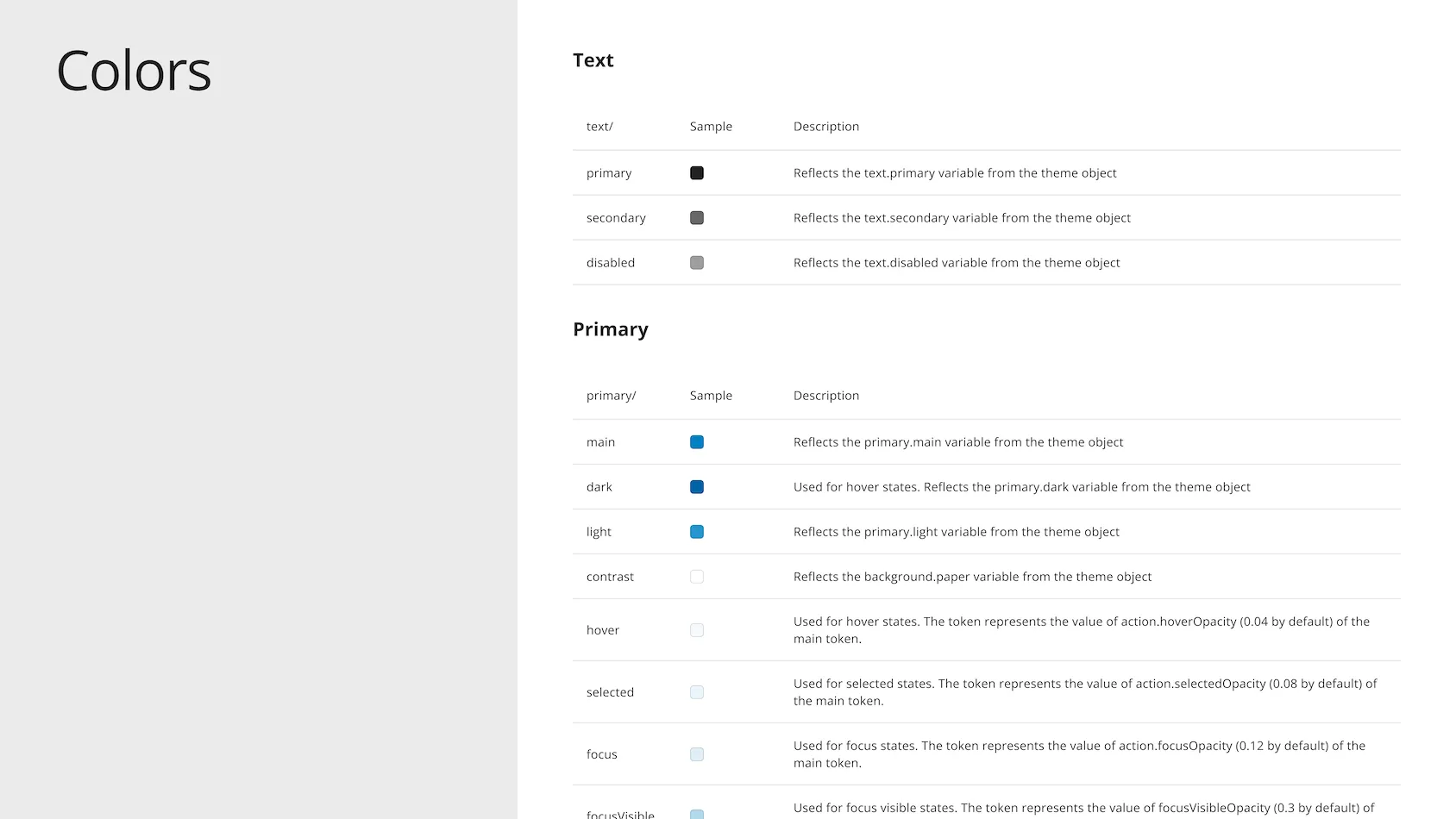
Rules and consistency: The design system
SHL.digital serves as the central hub for managing device fleets, though additional web applications were outlined as part of the broader ecosystem strategy. The development team was small but steadily expanding. Considering these factors, one of my initial proposals was to establish a design system that would provide a shared foundation—ensuring consistency while streamlining and optimizing both design and development processes.
Quick iterations and validation
Working closely with the Product Owner, I led weekly alignment meetings to present iterative updates, gather feedback, and refine the solution based on evolving business requirements and newly discovered user pain points. This continuous feedback loop allowed us to prioritize effectively, address usability challenges early, and ensure the product remained aligned with stakeholder expectations throughout development.
Once the MVP was deployed, we organized structured test trials with several pharma clients. These sessions provided valuable real-world insights, enabling us to validate our design and functional decisions under practical conditions. The feedback was very positive, confirming strong product-market fit and achieving a high success rate in meeting both user needs and operational requirements.
Lessons learned
Working within constraints isn’t a compromise, it’s a design skill. This project was never going to have a textbook design process. Acknowledging that early and adapting the approach delivered far more value than insisting on ideal conditions.
Multi-tenancy brings an interesting information design problem. Getting the scope filtering right was one of the most important design decision. The same data, presented at the wrong level of aggregation for a given user, is noise.
My work as coder
The situation
When I entered the project the existing codebase was chaotic and presented scalability risks. The lack of coding standards, messy inconsistent styling (inline, CSS modules, styled components), and flaky E2E test created an unreliable environment.
Developer productivity was also hindered by an inefficient local backend setup, which brought a lot of unnecessary extra work.
Actions taken
As the frontend team grew from one to three devs,I took ownership or sponsored multiple actions to improve the stability and the developer experience:
- introduced ESLint and Prettier to enforce code quality and avoid recurring formatting issues.
- re-architected the styling logic to properly utilize Material UI’s theming engine, following the Design System created by myself.
- organized multiple waves of refactoring to reduce the size of the codebase, by leveraging MUI theming and promoting component creation and reuse.
- helped stabilize our automated testing by rewriting a big part of the Cypress E2E tests.
Beside this, I collaborated architecting and implementing an important number of features following the approved designs:
- multiple data-heavy data grids with pagination, filtering and sorting.
- different forms using JSON Schema
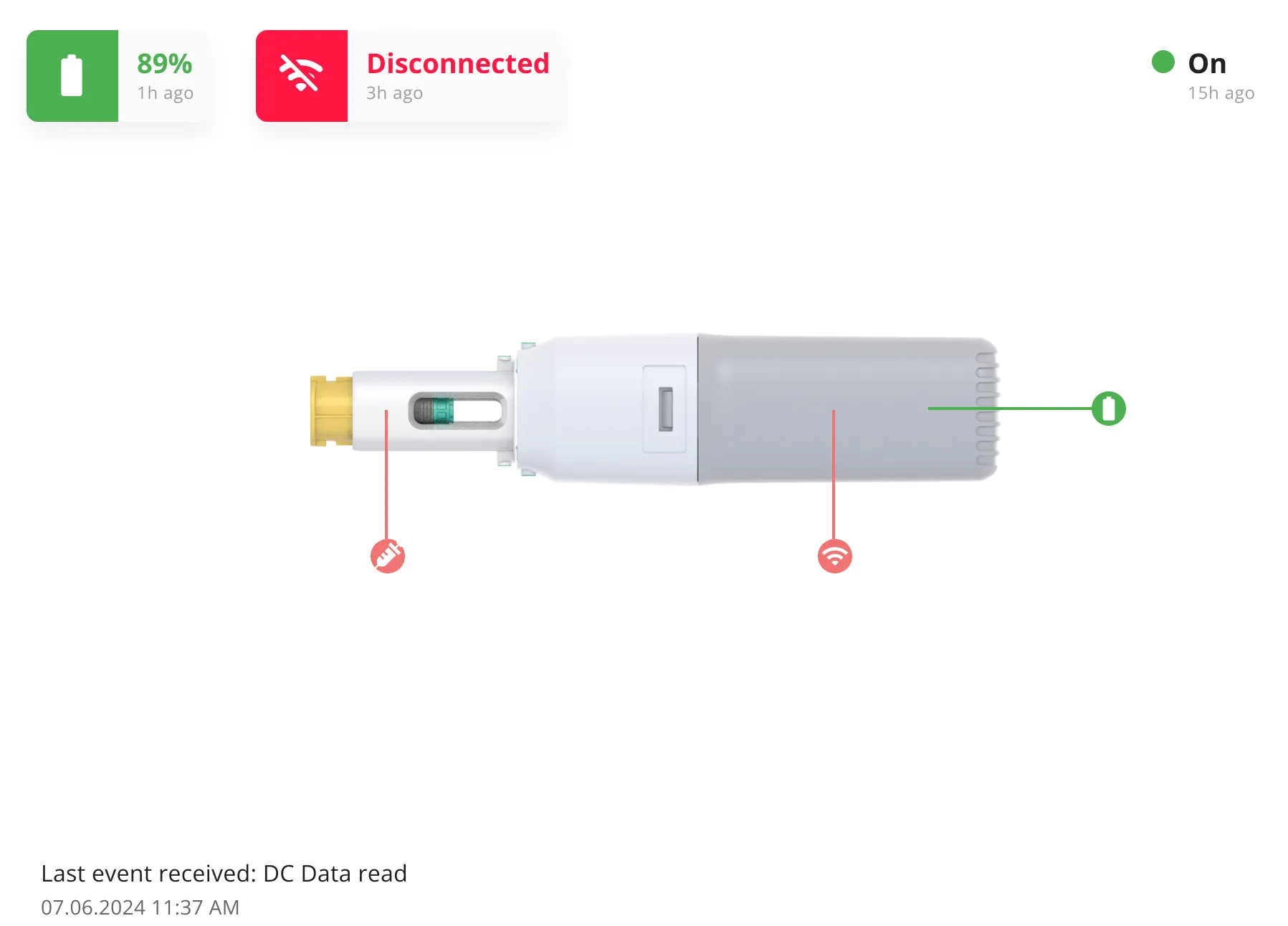
- digital device twin real-time animations using Framer-motion (now simply motion ) and Xstate
- a dashboard including charts using Rechart
Outcomes
The platform now allows hundreds of users to easily manage thousands of devices and track any issue in real-time.
- Users went from having no centralized view of device fleet health to a live dashboard showing status and exceptions. Problems that previously went unnoticed for days became immediately visible.
- A single interface that serves platform different roles, each seeing the right data at the right level of detail.
- The design system and component patterns created a foundation that subsequent features could build on consistently.
- A structured frontend codebase that have visual consistency as is following the defined design system, high-confidence automated testing, and a much faster onboarding process for new engineers.